Sound a feeling
deepening practice to learn from (not fix) feelings

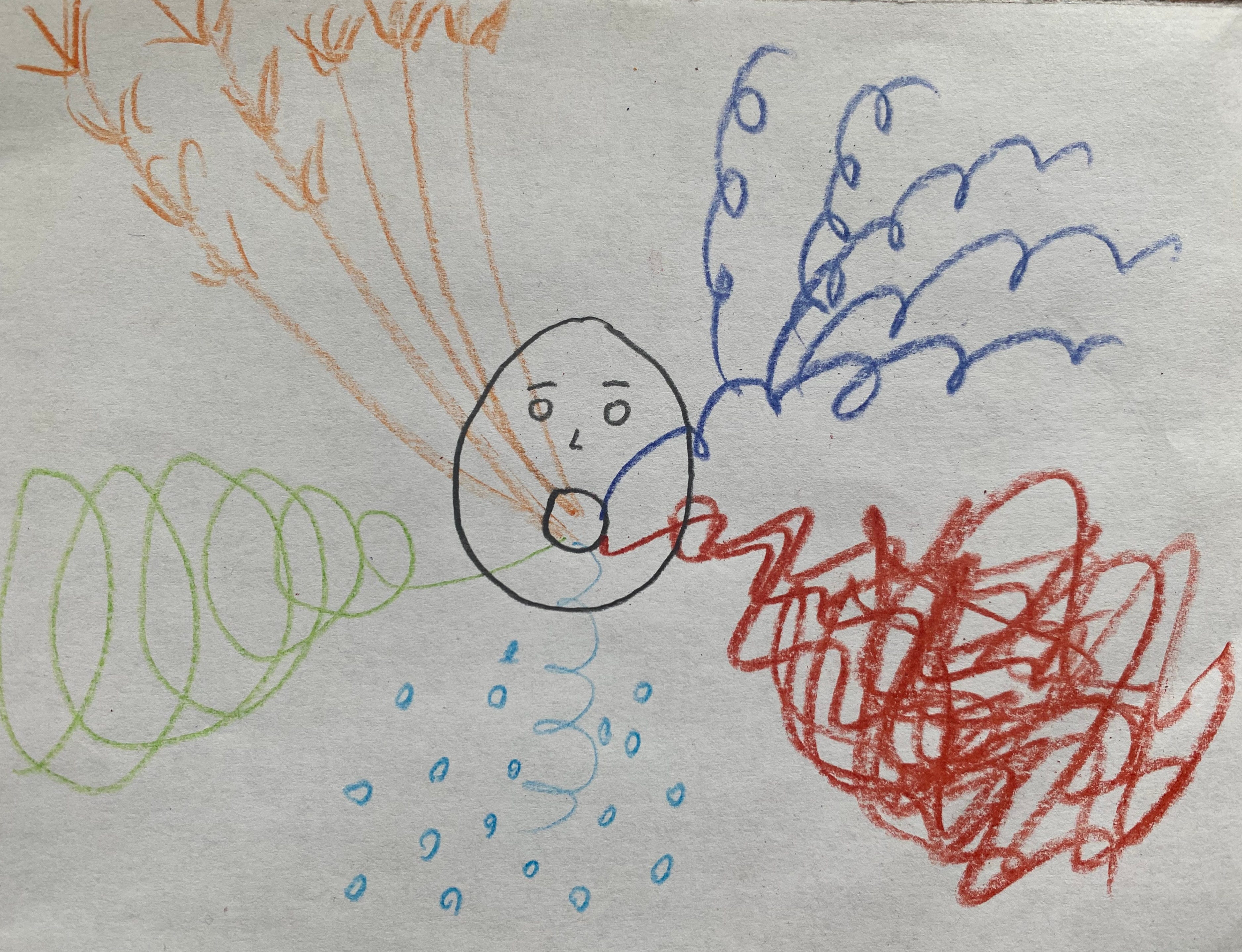
Another way to expand our capacity to listen to a feeling is to attune to the sounds of its movement.
Rather than words that name and tell, sounds invite a playful, flexible space for reciprocal relationship with feelings.
Practice:
Connect with a feeling you’d like to learn from, sense its movement, and…
Allow sounds to emerge.
Open your mouth and let sounds travel through the channel. This might be quiet, loud, slow, fast, sustained, or staccato. Stay, allow, listen. Let things shift, evolve, and reveal their layers. Allow the feeling to speak in its own language.
Dialogue with sound.
Go into a conversation with the feeling and grow a conversation through the language of sound. As you hear sounds expressed through you, respond to them through a playful call-response of sounds.
Onomatopoeia reflection.
Instead of writing about your experience as a way to reflect, stay with the material of sound by writing the onomatopoeia of what you’ve heard and expressed. Let your writing of sounds bring you into them more deeply to discover even more.
Movement and sound are the primary languages of feelings. May we play and may we listen.
Love, Melissa
Related posts: Listen to a feeling; Move a feeling
Additional Resources:
Make a Pretty Sound: A Story of Ella Jenkins by Traci N. Todd, illustrated by Eleanor Davis
Squeak, Rumble, Whomp! Whomp! Whomp! by Wynton Marsalis, illustrated by Paul Rogers
Nunu and the Sea by Isabella Kung
Feelings as Material (essay + practices)
Button Snail Hum is a pollination project of Noticing Matters.
Learn more and connect with me: melissaabutler.com | melissa@melissaabutler.com